
The Time Capsules We Wear
Why Tattoos Preserve the People We Used to Be
The other day I found myself staring at an old tattoo and realized something that had never crossed my mind before. The tattoo had remained the same as the day it was finished, yet the person who sat in that chair all those years ago had long since disappeared. His priorities, the people in his life, his ambitions, and even the way he viewed the world had changed, but the ink had remained completely indifferent to all of it, quietly preserving a version of someone who would never exist again.
That realization made me wonder if we've been describing tattoos the wrong way for decades. We call them reminders, memories, tributes, or expressions of individuality, but maybe none of those definitions goes far enough because a tattoo doesn't simply remind us of a moment. It preserves an entire version of ourselves exactly as we were when the needle first touched our skin, capturing our beliefs, emotions, fears, and state of mind in a way that no photograph or journal entry ever could.
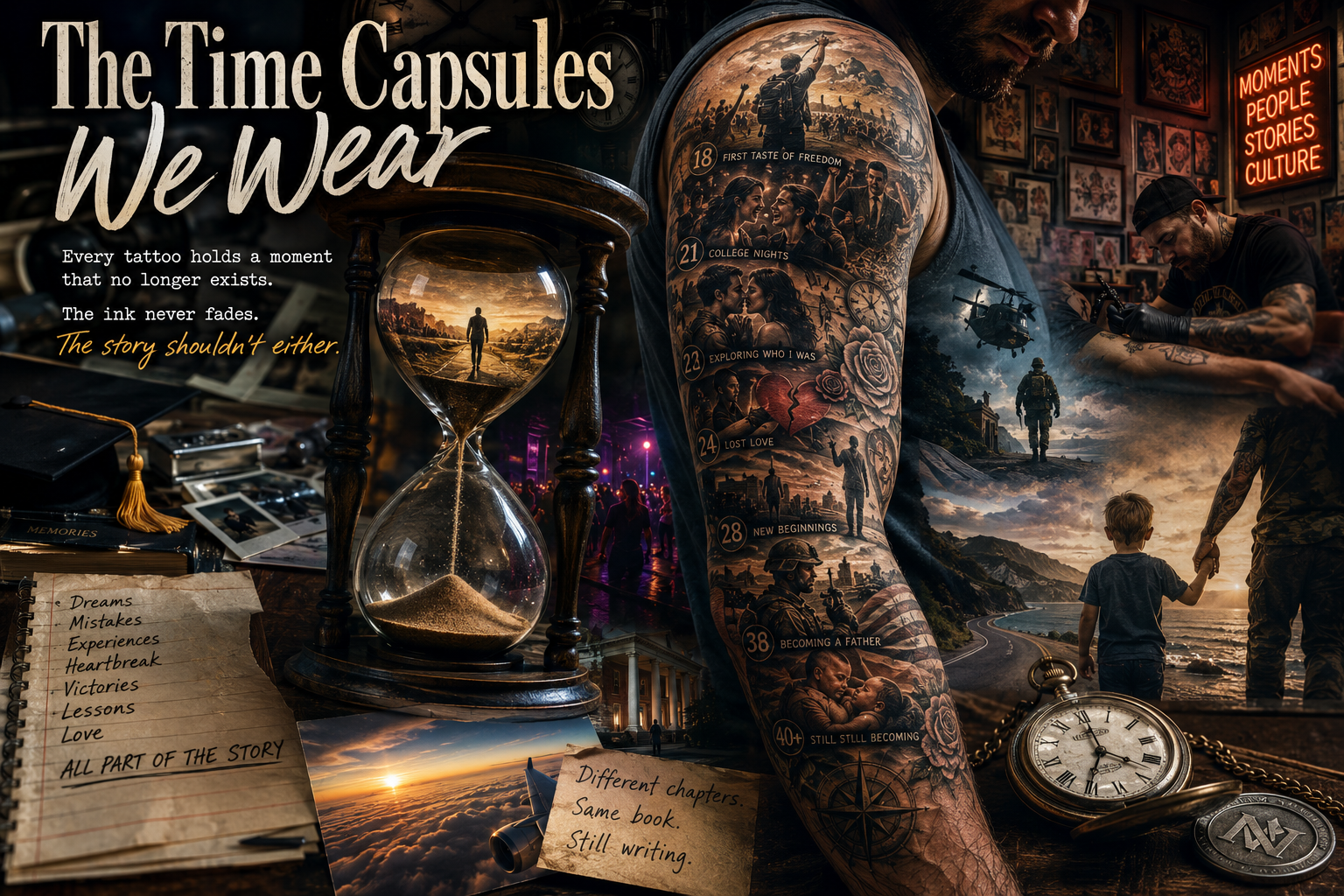
Spend enough time talking with tattoo collectors and you begin to realize that every piece carries far more than artwork. One tattoo might forever preserve the young college student who had just left home and experienced genuine independence for the first time, discovering that the world was infinitely larger than the neighborhood where they were raised.
It may quietly hold memories of friendships that once seemed permanent, relationships that never lasted, nights that blurred into mornings, or a season of life when they explored parts of their identity, including their sexuality, with a freedom they had never known before. Whether those experiences ultimately defined the rest of their lives or became chapters they eventually left behind is almost irrelevant because the tattoo isn't documenting the outcome. It is preserving the person who existed while those experiences were unfolding.
A tattoo may belong to someone preparing for military deployment, or to a woman who had just beaten cancer, a father celebrating the birth of his first child, another to someone who finally escaped addiction after believing for years that it would eventually destroy them.
The remarkable part is not that those events happened, it's that the tattoo continues carrying those moments long after the person who experienced them has evolved into someone entirely different.
That explains why an old tattoo can suddenly overwhelm someone with emotion years later. They are not looking at pigments trapped beneath the skin. They are unexpectedly meeting a former version of themselves, someone whose dreams, fears, confidence, insecurities, and understanding of the world existed only during that brief chapter of life. In that moment, the tattoo stops being artwork and becomes a doorway into a person who can never truly return.
The more I think about it, the more I wonder if tattoo artists have unknowingly become caretakers of human history. Every day they create work that preserves moments people cannot revisit, relationships that no longer exist, victories that once felt impossible, heartbreaks that eventually healed, and chapters that would have disappeared forever had they not been permanently recorded beneath the skin. Long after social media posts vanished, phones have been replaced, and hard drives have failed, those time capsules continue traveling through life with the people who carry them, silently collecting new meaning without ever changing themselves.
We like to believe they commemorate the past, but what they really do is preserve people who no longer exist, allowing us, years later, to briefly shake hands with someone we used to be.
As I've spent more time interviewing artists and collectors, I've become convinced that the tattoo industry has been preserving the wrong thing. We've become incredibly good at photographing and posting tattoos, yet we're doing a shitty job preserving the stories that made people get them in the first place.
That realization is shared by the team at Inker. Every artist has a story worth documenting, and every collector has a story worth preserving. Tattoos mark a point on someone's timeline that can never be recreated once that moment has passed.
Technology gives us the ability to preserve far more than portfolios. It gives us the opportunity to preserve tattoo culture through the people who lived it. The conversations, victories, losses, laughter, tears, and all the moments that eventually become inseparable from the artwork itself deserve to survive right alongside the ink.
That's the direction this industry should move in, and it's another reason I'm excited about what we're building at Inker. Finding great artists will always matter, but helping preserve the stories that make those artists and their collectors unforgettable may matter even more.
The ink has always been permanent, now it's time to make sure the stories have a chance to be permanent too.