
The Semicolon: When a Tattoo Becomes a Lifeline
How a Small Symbol Became a Promise to Keep Going
Every tattoo tells a story, but every once in a while, a tattoo comes along whose story grows larger than the artwork itself. The semicolon is one of those tattoos. To someone unfamiliar with its meaning, it looks almost insignificant, just a tiny punctuation mark that could easily be mistaken for a typo brought to life. Yet for thousands of people around the world, that simple symbol represents a battle that most never saw and, in many cases, a battle they weren't sure they were going to survive.
The semicolon movement gained worldwide recognition in 2013 through Project Semicolon, founded by Amy Bleuel. The symbolism comes directly from writing. A semicolon marks a place where an author could have ended a sentence but chose not to. The movement adopted that idea to represent a life that could have ended but continued instead. Since then, the semicolon has become one of the most recognizable symbols associated with mental health awareness, suicide prevention, hope, and resilience.
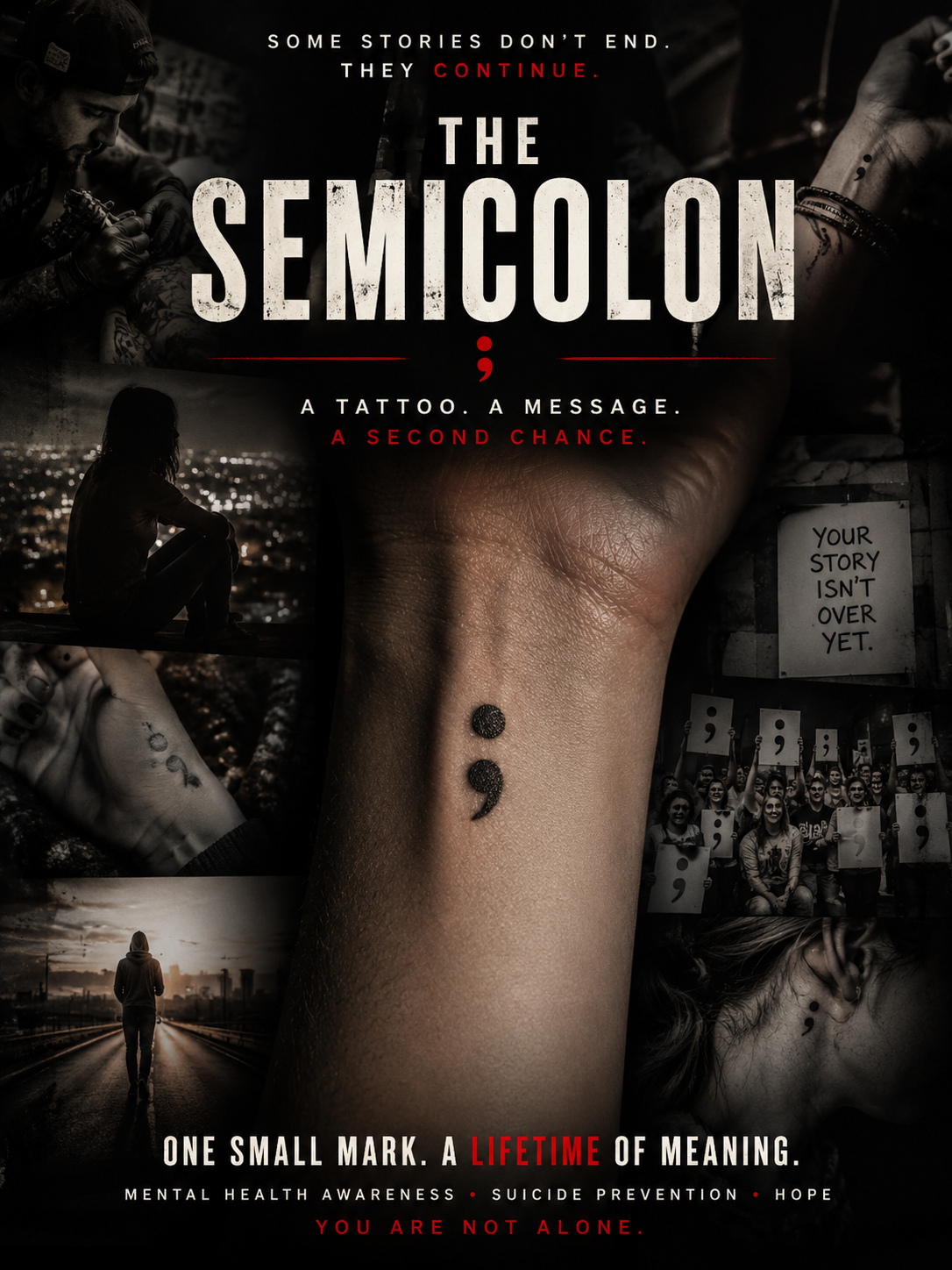
In one of the darkest chapters of someone's life, when words often become difficult to find and conversations become almost impossible to have, thousands of people decided the most honest way to tell their story wasn't through a speech, a social media post, or even a journal. They chose ink. They chose something permanent. That says a lot about the role tattooing plays in people's lives because tattoos have always had the unique ability to communicate things that language sometimes struggles to explain.
For many people, the semicolon isn't there for anyone else. It's there for the person wearing it. It becomes a quiet reminder on the difficult days that they've survived every day that came before it. It's a promise they once made to themselves, permanently written where they can see it whenever they need to. Some people place it on their wrist because it's always within view. Others hide it beneath clothing, knowing full well that nobody else may ever notice it. The location often matters less than the commitment it represents.
I found especially moving was the way tattoo artists often describe these appointments. Unlike many tattoos that begin with a discussion about style, placement, or color, semicolon tattoos frequently begin with a conversation. Sometimes that conversation lasts longer than the tattoo itself. The artist quickly realizes they're not simply creating a small punctuation mark. They're being trusted with one of the most personal chapters of another human being's life. It's a reminder that even the smallest tattoo can carry extraordinary emotional weight.
The semicolon has also become something unexpected within tattoo culture. It's become a way for complete strangers to recognize one another without saying a word. Someone notices that tiny symbol on another person's wrist, ankle, or hand, understands exactly what it represents, and suddenly two people who have never met share an unspoken understanding. Very few tattoos create that kind of connection. It's almost as if the semicolon has become its own quiet community, one built not around aesthetics but around survival.
I also think the semicolon teaches us something about tattooing itself. We spend a lot of time admiring sleeves, back pieces, and breathtaking works of realism because they're visually impressive, and they should be. But every now and then a tattoo reminds us that size has absolutely nothing to do with significance. A tattoo smaller than a thumbnail can carry more emotional weight than an entire body suit because meaning has never been measured in square inches of skin.
Whether someone chooses a semicolon tattoo or another deeply personal symbol, the lesson remains the same. Tattoos aren't always about showing the world who we are. Sometimes they're about quietly reminding ourselves why we're still here and where we've decided we're going next.
I've come to appreciate while meeting tattoo artists that they rarely talk about their work in terms of “small tattoos” or “big tattoos.” They talk about trust, and every appointment represents someone placing a permanent piece of their life into another person's hands, and symbols like the semicolon remind us just how meaningful that responsibility can be.
The semicolon reminds us that tattooing has never been just about ink. Sometimes it's about giving someone a permanent reminder of the promise they made to themselves on the day they decided their story wasn't over.
That's one of the things I admire most about this profession. Tattoo artists don't always realize the role they play in people's lives. They may think they're creating a small symbol on someone's wrist, but years later that same tattoo may still be quietly reminding its owner to keep going. There aren't many professions that get to leave that kind of mark on another human being.
I believe tattoo artists deserve to have their stories told just as much as the people they tattoo, and it's exactly why Inker exists. Behind every meaningful tattoo is an artist who was trusted with a moment that could never be recreated. Those are the artists worth discovering, and those are the stories worth preserving.